Writing for Squawka, I’ve written a statistical analysis of Sunday’s match between West Bromwich Albion and Manchester United – a mad game that ended in a five all draw.

Click here to read my stats-based match report.
The writing blog of David Stringer
Writing for Squawka, I’ve written a statistical analysis of Sunday’s match between West Bromwich Albion and Manchester United – a mad game that ended in a five all draw.
Click here to read my stats-based match report.
The second last Lower League Week went up late in the week last week, so appropriately enough, the link to it is going up late as well.
This edition covers John Hughes’ sacking by Hartlepool, James Beattie’s appointment as Accrington manager, and former Gillingham manager Andy Hessenthaler announcing his intent to return to management… and his belief that he would also have taken them up this year.
After two years of spending heavily, Swindon have announced their intention to make massive cuts for next year. Portsmouth will probably not be able to pay a transfer fee for a few years, as a result of being required to pay ‘football debts’ in full, and there’s the potential for a Coventry buyout by Preston Haskell IV, and investment as a result.
An Oxford supporters’ group, OxVox, have helped force the club’s ground to be designated as a ‘community asset’, protecting it against owners who want to sell it for a quick profit.
Aldershot and Wycombe have had financial problems, while a Yeovil fan has been denied the chance to take a flag into the playoff final… unless he paid £1500 for eight people to help him.

Click here to read Lower League Week – Managers and Money
The new Star Trek film, JJ Abrams’ second and the twelfth overall, is now in cinemas both in America as well as the UK (and presumably in one or two other countries).
Writing for the Ann Arbor Review, I’ve looked back across all 7 previous films starring the original characters, and reviewed them collectively, giving my thoughts on how the films measure up against each other, and purely as entertainment in their own rights.
While I don’t want to spoil what I have to say, Star Trek V is a total mess.

I hadn’t realised quite how much they vary in subject matter and style, but I enjoyed going back and rewatching some films I’ve not seen for quite some time.
Click here to read Marathon Man: Star Trek (Films I – IV)
Click here to read Marathon Man: Star Trek (V, VI, XI)
New today on Squawka, I’ve taken a statisitical look at three English players based abroad in major European leagues. That’s David Beckham, Joey Barton, and Michael Mancienne.

Click here to read Englishmen Abroad.
On Friday BornOffside published my latest Lower League Week.
It begins with a summary of the events in the League One and Two playoff semi-finals, which were pretty dramatic.
I also covered the smaller, end of season stories.
Bury fan favourite Efe Sodje is in conflict with manager Kevin Blackwell, refusing to sign a new contract unless he leaves. Steve Fletcher has finally retired at the age of 40, not because decades of centre-forwarding have taken their toll on his body, but simply because he’s pretty far down the pecking order now.

Coventry were locked out of their stadium again after continuing to refuse to pay the rent (what are they like!) and Martin Ling, who’d been on sick leave, has been replaced as Torquay manager by Alan Knill.
Having narrowly survived relegation, Dagenham caretaker manager Wayne Burnett has been appointed as permanent manager, while Brian Flynn has decided against continuing as Doncaster boss despite their last minute title win.
And Luke McCormick has returned to Plymouth, the club that terminated his contract after he was convicted of causing the death of two young boys. Yeah, it’s not all sweetness and light.
Click here to read The Lower League Week – The Stoppage Time Equaliser Edition
Writing for the Ann Arbor Review of Books, I’ve reviewed a trio of Mark Wahlberg films ahead of what’s sure to be his greatest work yet, the Michael Bay directed weightlifter crime comedy Pain & Gain.
I’ve watched and reviewed The Other Guys, Ted, and Boogie Nights – three films I’d not previously seen. All in all, I was pleasantly surprised – though still with a few reservations.

I only used one ‘Marky Mark’ reference, which I would claim is a sign of restraint, but the truth is that I’m only very vaguely aware he was in New Kids on the Block
Click here to read Marathon Man: Mark Wahlberg
This weekend sees the American premiere of 42, a biopic of the American baseball player and race pioneer Jackie Robinson.
It’s written and directed by Brian Helgeland, the writer of some of some very good films in the last two decades – LA Confidential and Mystic River among them.

Writing for the Ann Arbor Review of Books, I’ve reviewed six of his more notable films, all of which he wrote, some of which he also directed. Those films are LA Confidential; Payback (also directed); A Knight’s Tale (also directed); Mystic River; Man on Fire; Green Zone.
Yes, you read that right – the same man who wrote LA Confidential and violent revenge fantasies Payback and Man on Fire also wrote and directed the tale of a jousting knight, set to Queen’s We Will Rock You.
Click here to read Marathon Man: Brian Helgeland
In football, it’s an unargued truism that managers deserve loyalty, that the best course of action is to back the man in charge.
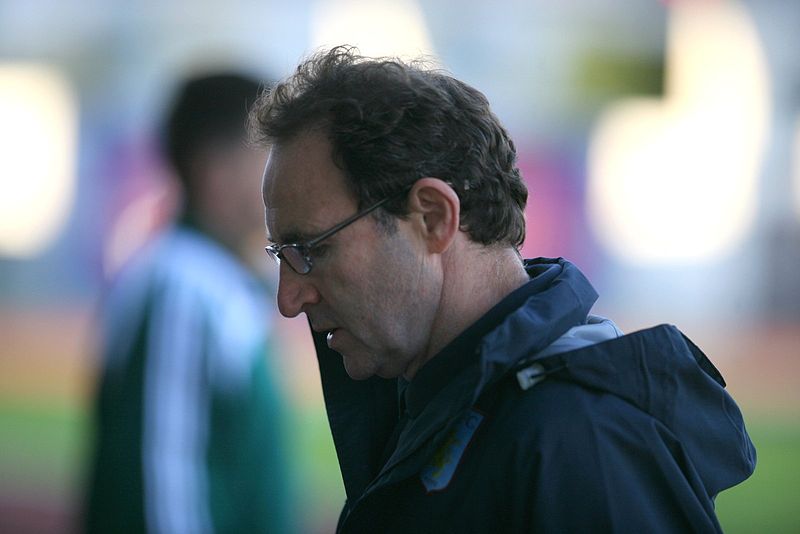
But what if the man in charge has spent over a year in charge with no definite sign of forward progress (Martin O’Neill) and there’s a danger of relegation. Should he be allowed more time?
When a boss who’s got a good reputation as a coach, but hasn’t done much as a manager, and is taking the team down the table (Michael Appleton), should they be persisted with? Even when the former caretaker manager had a better record, and is still on staff?
I wrote about this dilemma on Friday for Bornoffside.
Click here to read Have Recent Managerial Sackings Been Fair?
As mentioned previously, this month I’ve begun to write for the football stats site Squawka.com.
Well, I’m now on the site – I’ve even got my own author profile!
Squawka, as well as providing in depth statistics on shot accuracy, chances created and average pass length, puts together it’s own unique ‘Squawka Performance Score’ – basically assigning a value to each of those performance areas.
During the week, my first article went up – a look at the Performance Scores of England’s centre halves, to try and add to the debate over who Roy Hodgson should select.

Click here to get the Squawka take on who the best English centre halves have been this season.
I’ve done something that I really don’t do often enough, and sat down with no distractions, and written a short piece of prose from beginning to end. No grand, ambitious plans for a multi-storyline epic that fizzle out into nothing, just a brief, punchy little story.
I hope you enjoy it.

Comrade Sidorova stood on the Middle Line of the Moscow GUM, looking down to the Lower and observing what capitalism had brought upon his country.
Huge arches, maybe fifteen feet across each, contained the glass storefronts of shops owned by multinational corporations. The architecture was stunning – Pomerantsev’s genius had survived communism from beginning to end, which at one point he feared nothing in his beloved homeland would manage. But their use was a barbaric joke – he could see three arches in a row containing the name and products of an American jeans company.
Sidorova had never been able to follow the logic of jeans as a luxury product. He had worn them on occasion in his younger days – they were uncomfortable against the skin, and downright abusive when wet. It was the propaganda which swung it, he had decided – marketing, to use the capitalist term. Perhaps knowing that the product itself was not much use, units of the rough material were moved out of stores worldwide by using imagery of rugged American cowboys and trendy modern party-goers.
It hurt Sidorova’s pride to know that, for many young Russians today, their ideal of masculinity was not their fathers and grandfathers who had worked without complaint in the fields and the military, but an American posing in the Texas sun.Sidorova looked upward. Shukhov’s glass ceiling was magnificent – even a century after its construction there were few like it anywhere in the world. It flooded the building below in so much light that Sidorova could almost believe a God must have created it. There was a train station in London whose roof was also built more of glass than metal. But even there the ratio of iron to glass weighed more heavily on the side of practicality. Saint Pancreas? Some body part, but he wasn’t sure which. Even the great Victorian engineers – perhaps the greatest engineering nation ever to have lived – could not match the innovative genius of Shukhov.
Beauty comes from that which is natural, Sidorova felt, and man should only interfere when it is a necessity. Centralised planning is the worst form of human interference.This building had played it’s part in Sidorova’s awakening from his propaganda induced childhood stupor. As a young man, he had been assigned here, in the days when queues for the more practical items it stocked stretched across Red Square.
Although the desperation on the people’s faces were hideous, his superiors had drilled it into him that one day this magnificent, palatial shopping centre would serve it’s purpose, to help feed and clothe the people of the world’s rising superpower. The problem was that the party simply had not had enough time to get things working the way they should.But the offices of the shopping centre silently debated this point. A few were still used, a faded image of the days when this was the central point of planning for Stalin’s first five-year plan. Many more laid empty, abandoned.
It was as he stood here, in this very spot so many years ago, that he was struck with an idea. Simply seeing the sheer amount of light that flooded in from the ceiling, while the ceiling held solid, was a revelation to him. A combination of nature and man – the warmth of the indoors, with every inch of the hallways flooded with natural sunlight. He saw the beauty of the natural world with eyes that he had never used before, and realised immediately that it must have been a genius who could build such a structure. A genius who built a thing of beauty before the Communist party rose to power.
It was a beauty that was misused by the party – he could see thugs in state uniforms pushing around the poor as they merely looked for enough food to keep their families alive.
Sidorova had thought of the entire building as a new form of propaganda, created not for the glorification of Stalin, but the glorification of the natural world, and the men who could tame it.
As he took the train journey back home, Sidorova appreciated the beauty of the fields, the skies, even the ramshackle huts, in a way he never had before. The thought had simply never occurred to him that Mother Russia could thrive without the party’s blessing, that his dissatisfactions were circles that could not be squared.
By the time he reached home, his mind was consumed with blasphemous ideas.Sidorova did not consider himself a killjoy, he knew there were important things in life beside bread and water. But he also knew the profit margins on trousers, sports shoes, jewellery, and considered it a sick joke that so much of the price went to the propagandists. In Asia the clothing was crafted by workers who toiled for pennies.
Banner after banner on the Lower Line bore a single message – advertisements for a perfume company. Giant bottles were painted on the sheets, repeated over and over, lest consumers forget their implicit message – CONSUME! – in the seconds walking from one to the next.
Despite Sidorova’s melancholy, he knew that, beyond doubt, what he saw around him was better than what had gone before. He had no doubts over the side in the struggle he had chosen, and, were he required to do so, he would do the same again without a moment’s doubt. But he had dreamed – more than that, believed – that the fall of communism would see power given to the people. That they would no longer be manipulated into actions for the benefit of the powerful.
Thinking back over his life, Sidorova realised what it was he missed about communism – the struggle against it.
The secret meetings. The walks through the streets of Moscow on winter days when the poor starved and his breath seemed to freeze in the air… He was warmed by the knowledge that he and his colleagues were struggling together for the common good.
But now… Who was left who would struggle with him against the modern propaganda for over-priced trousers?

 SciFiFootball