I wasn’t optimistic about Veronika Decides to Die when I first picked it out. Paulo Coehlo is a name I’m aware of vaguely, but I’d never read anything of his before I noticed Veronika on the shelf of a charity shop.
The blurb also gave me pause for thought:
Veronika has everything in life she could wish for – young and pretty, with plenty of attractive boyfriends, a steady job, a loving family. Yet Veronika is not happy and one winter’s morning she takes an overdose of sleeping pills, only to wake up some time later in the local hospital. There she is told that her heart is now irreparably damaged and she has only a few days to live…
Through these intense days Veronika comes to realise that every second of existence is a choice we all make between living and dying. This is a moving and uplifting song to life, one that reminds us that every moment in our lives is special and precious.
While others may disagree, to me that sounds like a routine, by the numbers, ‘heartwarming’ story, in which the hero discovers the joy of life, realises there are things worth experiencing, opens her heart, instantly embraces joy, skydives from a plane, blablabla.
It’s not that I disagree with that sort of outlook on life, but in my experience it’s usually handled badly – superficially and cleanly. If I am cynical about ‘heartwarming’ stories, it’s only because it’s a story format that’s hard to pull off in my experience. Its more likely to end up cheesy and sickly sweet, rather than upbeat and optimistic as they’re intended to be.
And Veronika Decides To Die does pull this off – it’s a genuinely sweet book, with the sharp edges – dealing with subjects like misery, mental illness, the difficulty of connecting with others – intact.
Paulo Coelho: You may remember him from such poses as ‘stroking his beard’ and ‘resting his head against his left hand’.
I really like ‘magical realism’ as a style of prose – the type of world that feels more real than reality, a bigger, quirkier and more colourful version of the real world, but still rooted in the complex and sometimes dark emotions of the world around us.
This is achieved partially by the colour and poetry of the prose, and partially with playful ideas – there’s Veronika’s suicide note, Coehlo writes himself into the novel, and one of the doctors believes he’s found a single cause of all madness (one that isn’t totally implausible).
The story begins with the main character, Veronika, deciding on suicide, not because she’s been worn down and is unable to cope with life, but because, on a more intellectual than emotional level feels her life is pointless. It’s an interesting choice for the writer to make, as is the whimsical way the scene plays out – considering placing the blame for her suicide on a magazine article that was mildly rude about Slovenia, her home country.
As mentioned in the blurb, Veronika’s suicide attempt fails, leaving her, weeks from an inevitable death, in a mental institute. But she doesn’t open up straight away – the opposite in fact, shutting down and withdrawing from those around her, so as few people are hurt by her death as possible.
The book takes a long time for the positivity I was expecting to kick in – not only is Veronika consistently negative, but it’s persuasive, logical negativity as well.
As Veronika embraces her loneliness, the scope of the story expands, showing us the patients of the institute, with conditions ranging from anxiety to schizophrenia, and the characters are well drawn, sympathetic and believable.
Having said that, none of the characters are given mental illnesses that place them into an unwinnable situation, and I’m not sure schizophrenia works the way it’s depicted here.
There’s also an event towards the end of the story I found hard to buy, but by the time I reached it, the book had built up enough goodwill, through its tenderness, humour and depth, that I was willing to set my objection aside.
Verdict: A genuinely inspiring and empathic novel, with tenderness and sympathy for it’s flawed characters.
Dead Boss is the new sitcom cowritten by and starring Sharon Horgan (Pulling, Annually Retentive, Todd Margaret), and is a darkish comedy with quite a cheerful tone.
The first episode opens in court, after Helen Stephens (Horgan) has just been found guilty of murdering her boss. Some quick exposition lets the audience in on the plot, and the subtext of what’s really going on, as she’s sentenced and led away.
Dead Boss is silly enough to make light of the dark subject (complete with cheerfully upbeat narration and music), but dark enough that interactions with Top Dog and Yvonne (leaders of the prison gang) have menace to them.
There’s a strong story running through the comedy, whereas Life’s Too Short, for instance, is more a series of comic incidents with a plot loosely connecting them. With the process of appeals, and the murder mystery, there’s a strong story here as well as the comic incidents.
But of course, comedies rely on the quality of their jokes, and Dead Boss is packed with good lines, many of them laugh out loud and mostly character based. Some of the jokes are a bit filthy (Horgan was one of the writers on Monkey Dust) but Dead Boss doesn’t reach for the cheap shocks.
Though you may expect a writer-star to give themselves the best lines, there’s a range of strong characters here – Helen’s meek, arsonist cellmate, her cheerfully indifferent sister, Jennifer Saunders as The Governor – almost as selfishly detached and delusional as Absolutely Fabulous‘ Eddy Monsoon – and a cheerfully incompetent lawyer, who announces that ‘Until I get paid, my work will be half-arsed. At best.’
The best comparison I can make on Dead Boss‘ style is with 30 Rock.
I first became aware of 30 Rock by repuation, a fair while before seeing an episode. With it being hyped up so much, I expected something very funny and emotionally and tonally realistic, like Frasier and Cheers at their peaks. In fact, it’s more like Airplane – very funny, but in a silly and inconsequential way, with characters that are quite over the top. Dead Boss is the same. Dead Boss has the kind of world that isn’t realistic, (and certainly wouldn’t be mistaken for a documentary as The Office apparently was) but has plenty of funny and compelling characters. None of the characters is a Tracy Jordan or Jack Donaghy, but there are a few (Aisling Bea’s and Edward Hogg’s characters in particular) who are just below that level in quality.
Verdict:
Silly but involving ensemble sitcom with colourful characters and big laughs.
If you’ve been paying attention to this blog, you may have noticed that I’ve fallen behind on book reviews.
At the turn of the year, I started a commitment on another website, to read at least 52 books over the course of the year. The idea is that, with so many easy distractions – televisions that can record entire series to watch at the viewer’s convenience; a whole internet full of articles on every subject, written in sizes that can be digested in ten minutes – sometimes it’s important to arrange the time to read, as a little more effort is required.
In addition, I’ve been intending to review all of the books I read, partially in order to keep in the habit of writing, partially in order to think about why I like or dislike the stories I read, partially in order to advertise my reviewing abilities to anyone who’s interested.
However, I’ve fallen a little behind the schedule of a book a week in reading, and quite far behind in reviewing. I’ve reviewed six books so far, (one of them reviewed on another site) and am currently reading my fourteenth book. (I know, way behind schedule…)
I have made notes on each book after reading, and I intend to catch up soon, in addition to other things here on the blog and elsewhere. For the moment, here are the books I’ve read this year, with links to those reviewed:
The Adventures of Sherlock Holmes by Arthur Conan Doyle
Catching Fire (Hunger Games 2) by Suzanne Collins
The Moon is a Harsh Mistress by Robert Heinlein
The Alchemist by Paulo Coelho
I intend to get back into the groove of reviewing as I read, so I can do so while thoughts are fresh in my mind. There will be exceptions – obviously some of the thoughts I’ve had on the two Paulo Coelho books are interlinked, so I’ll review Veronika first, to pass on the thoughts I had in the order that I had them.
Hopefully by the end of June I’ll be up to date, provided other things don’t get in my way.
I’m now catching upon links to my articles elsewhere.
I’ve reviewed Paul Watson’s Up Pohnpei for BornOffside. He was a freelance football journalist, working for Football Italia amongst others, when he decided to apply for the manager’s position at the small Micronesian nation of Pohnpei, where the organisation was roughly at Sunday League level. It’s a really interesting story, and you can read my review ofhis Micronesian adventure here.
Due to commitments elsewhere, I missed a week of The Lower League Week on BornOffside. Instead, last week I submitted a double dose, The Lower League Fortnight. The Lower League Fortnight – The Up and Down Edition
I also wrote for The Leaky Wiki about Robin Gibb’s recovery from illness, and the potential it provides for puns: Robin Gibb Staying Alive
I’ve fell behind with my blogging in recent weeks, but I intend to blog more regularly in the coming weeks – this should keep you going for now.
I’m a fan of Isaac Asimov, particularly the Foundation trilogy, and though I’ve read a fair few of his other books as well there’s a lot I haven’t (he’s one of the most prolific writers of the twentieth century, having written over 500 books). Although best known for his fiction, he also wrote numerous textbooks on subjects such as biochemistry, physics and astronomy.
The sheer number of stories he wrote means that there’s obviously a variation in quality – I remember reading one of the further books in the Foundation saga, that felt like a bland tie-in to an interesting universe – a bit like a mediocre writer being given access to write in the Star Wars or Star Trek official tie-ins. Not as low as fan fiction, but not what you’d expect from one of the giants of his genre, either.
He may be looking into the camera, but his hand is writing out his latest book.
I’m a bit unsure on how to classify and review a short story collection. A novel is a story, which has an arc, characters, emotional and story rises and falls. A collection works in a slightly different way – it’s a series of smaller, micro-stories, which may make it tempting to create groupings around the story that don’t properly fit. So apologies in advance if I do that.
It might be an odd thing to say, but while Asimov is widely thought of as one science fiction’s all time greats, in some ways he’s very underrated.
Generally its acknowledged that Asimov’s characters aren’t his strongest point – while compelling, they tend to lack the complexity and internal conflict of truly outstanding characters. While this is a weakness I agree with, I find myself tempted to associate this with an overall lack of imagination. When I’ve not read any Asimov for a while, I tend to fall into the trap of thinking of his stories that I have liked as childish enjoyments, that I’ve now outgrown – enjoyments like Thunderbirds or Power Rangers.
But Isaac Asimov does have a wild and varied imagination, and Robot Dreams is a strong sampling of his work – 21 stories first published between 1947 and 1989, across 42 years, on a range of subjects and themes.
One of the things that’s striking about the collection as a whole is a 50s sensibility. It’s hard to pin down what I mean by this, but it’s a sensation I felt for most of the stories… Think of a world of picket fences, of neatly mowed lawns, and straightforward characters who are relatively self-aware and not overly deceptive. Everything I’ve read of Philip K. Dick’s has been messy, complicated – Asimov, here in particular, feels straightforward.
Not that that’s a bad thing, but it’s a sensation I felt across stories. In particular, Lest We Remember revolves around a young couple, the female of the pair referring to themselves as ‘The firm of Jonny and Sue’, which has a particularly ‘gee whizz’ feel to it.
Most of the stories are set ‘ten minutes in the future’ – dealing with developments and trends that, for all we know, could be beginning now. The Billiard Ball is a story of two scientists, rivals since university, one a Nobel prize-winning theoretician, the other a practical engineer who’s became very rich by putting the former’s ideas into practice.
Multivac, an advanced computer used by Asimov across many of his stories, is used to decide an election in Franchise, as a dating machine in True Love, and to create new jokes in Jokester.
And Breeds There A Man? follows Ralson, a scientist working on a missile defence system during the Cold War who suffers from as a strange delusion.
All of these appear to be set either in the twenty-first century or an imagined time between Asimov’s present and ours – these stories have the feel of being both familiar and fanciful, rooted in the present, but looking out to the future.
And there are other stories that are wildly imaginative – there’s a story set on an isolated asteroid, which has its own strange society; the story of the struggles to set up an independent Mars Colony; post-humanism; a time-travelling Neanderthal; life after death; and a few stories about life that’s advanced beyond our understanding.
Despite access to a time machine, Bob the Neanderthal still wears traditional Neanderthal clothing. He's keeping it real.
Of all the stories, there’s only Eyes Do More Than See that I’d consider a bad story – because of a twist that’s heavy handedly emotional. And even that story has the virtue of being short.
The remainder of the stories are all compelling, for a variety of reasons – mystery, concern for characters, a sense of adventure.
My favourite of the stories is The Martian Way. Set in the early days of the Mars Colony, where Humans have started to settle on Mars with the cost being borne mainly by Earth and subsidised by ‘Scavengers’ who capture the debris left by various spaceships over the years between now and then.
A charismatic politician wants to cut back on the costs of the space programme, a programme that is unlikely to break into profit during his lifetime or that of any of his voters. So, seemingly faced with no option but to return to Earth, one of the Scavengers comes up with a bold plan, that will require pushing technology further than anyone considers possible, in order to ensure Martian independence.
I don’t want to say what the action involves, as I was struck by the sense of audacity and I wouldn’t want to spoil this. But the story has a similar feel to stories about the Apollo programme – astronauts going out on highly dangerous missions, pushing back the boundaries of engineering and of known science, the boundaries of what can be done. It’s the kind of subject that I find really stirring and inspiring when done well, and it’s done really well here.
Remarkably, despite it’s similarities in feel to the Apollo programme, this story was written in 1952, five years before Sputnik was put into orbit, and nine before Yuri Gagarin became the first Human in space.
In contrast to The Martian Way, Little Lost Robot and Robot Dreams are small-scale stories, a combination of mystery and moral discussion. In the former, Susan Calvin, a leading robopsychologist and one of Asimov’s recurring characters, is called to a remote scientific base to find the whereabouts of a missing robot. The robot has had its programming, it’s Three Laws altered in such a way that would make it dangerous if it manages to stowaway back to Earth. Robot Dreams features Calvin again, and a robot that has developed the capacity to dream.
The use of robots as a metaphor for slavery is an old idea, in fact dating back as far as the origin of the word robot. What’s unusual is that the story would normally feature a kind, caring protagonist, one who argues for the robots’ right to be considered equals. In both of these stories the characters are hard-headed. In fact when the missing robot in Little Lost Robot hides amongst 63 physically identical machines, Calvin immediately recommends destroying all of them, and is talked out of it on economic, not moral grounds. This is despite the fact that she herself believes the robots have developed a limited form of sentience.
It’s an interesting approach – but I think by not explicitly stating the ‘moral’ of the story it’s made more powerful, and prompts more thoughts as to whether these machines genuinely are sophisticated enough to be considered worthy of equality. It also means that these two stories remain powerful and fresh – despite the former being written over half a century ago, and being made familiar by numerous imitations.
On the whole, these are stories that are positive and forward-looking – not ‘Frankenstein stories’ about humanity going too far, ‘playing God’ and being smacked down for it, but stories about the positive results of scientific advancement.
We'd all be optimistic if we had a throne as badass as his.
But there are a number of satirical and cynical stories. The Machine That Won The War, tells of a meeting in the aftermath of a victorious war, and discussion of the brilliant machine that helped them achieve victory; Franchise is set in a world where presidential elections are decided by one vote, of a man chosen by Multivac as the ultimate average American; and Lest We Remember is the story of how gaining new, almost supernatural skills brings out the worst impulses in its hero.
One major flaw struck me was the gender politics of some of the stories. Though I get the feeling that Asimov would consider himself a feminist from the stories, I counted six significant female characters across the twenty-one stories (Susan Calvin appearing twice). Two of these six are defined to a large extent by their spouse, one works as a nanny, a stereotypically feminine role, and one is an extremely meek scientist whose husband explicitly states that there aren’t many career women like her on Earth. The Machine That Won The War; The Last Question and The Feeling Of Power all have a number of male scientists and soldiers whose personalities aren’t important to the story, and could be changed to women by a simple change of name and pronoun, so it makes me a little uncomfortable that the characters are so overwhelmingly male.
Having said that, Susan Calvin is probably the most interesting character in the book, so Asimov is clearly capable of writing women..I think maybe he just underestimated how quickly society would move towards female equality in the workplace.
I’m honestly not sure whether to include this paragraph or not, because it feels like I’m picking on Asimov for a flaw he couldn’t realistically be expected to see as a flaw, a manner of thinking he was conditioned into by his experiences. But it was something I felt as a flaw when reading, so I think probably worth mentioning.
I really enjoyed the collection – despite being a fan, I’ve not read either I, Robot, his definitive book, (which Little Lost Robot is taken from) or The Gods Themselves and Gold, both Hugo award winners, but I am definitely more motivated to seek them out now.
Given the sheer amount of stories Asimov has written, not all of them will be worth reading – but I’d say that twenty of the twenty-one in this collection are.
Verdict: While characters aren’t his strongest point, Robot Dreams is a collection of idea-based scifi from a master of the genre.
The Ghost, written by Robert Harris, a one-time friend of Tony Blair, features a former British Prime Minister not named Tony Blair.
The character, Adam Lang, was a charismatic PM (but not named Tony Blair), was accused of lacking depth (but wasn’t named Tony Blair), and got Britain heavily involved in the War on Terror (but remember, he isn’t Tony Blair).
This Robert Harris doesn’t have a very good sense of imagination
I’m not quite sure whether to refer to The Ghost as a thriller or a satire. It definitely progresses as a thriller – the protagonist, a celebrity ghostwriter, is hired at the last minute to make sure Adam Lang’s forthcoming memoirs are completed in time for the deadline. The story follows his progress as he tries to learn more about Lang, to understand the psychology behind the former Prime Minister.
I’ve set out to read a minimum of 52 books this year, and write a brief review of each. I’ve reached a point that I didn’t think I’d reach this early – I’m justifying my selection by saying that it is technically a book.
Yep, it’s the novelisation of Transformers 2
Although I’m reading from The Complete Adventures of Sherlock Holmes, The Valley of Fear was originally published as a standalone novel. So, I’m going to count it as such, even if it is just over a hundred pages long.
I’ve just finished reading Afrika Reich, which is a very tough book to read at times. The book is set in a parallel universe where Nazi Germany’s victory at Dunkirk forced a ceasefire with Britain. They then defeated Soviet Russia, while pacifist America stayed out of the war. At the Casablanca Conference in 1943, Germany and Britain then carved up Africa between them.
Burton Cole, a retired former soldier and the protagonist, is hired to kill Walter Hochburg, the Governor of German Kongo.
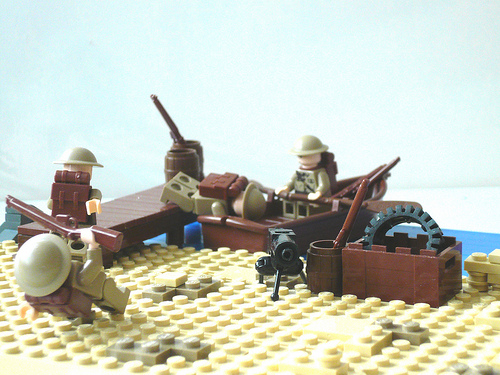
This is all feeling quite dark and serious. Here, have some pictures of lego men evacuating Dunkirk
The first book I read this year was Moneyball by Michael Lewis. A financial journalist, the main body of his journalism has covered Wall Street.
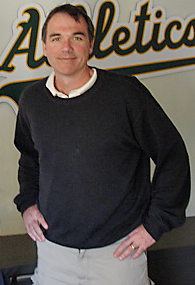
In 2002 Lewis set out to look at how a new, more analytical approach to baseball management was altering the way the game was ran, only to discover that, by and large, it wasn’t. The one exception to this rule was the Oakland Athletics, under the charge of General Manager Billy Beane.
Something I intend to do more of during the next year, is read more books. That feels like it’s an obvious thing for an aspiring writer to do, but I have a bad habit of getting distracted by television, internet and news sites.
It’s easy to think of news articles and TV programmes produced the previous month as being more relevant to my life than a 19th century book about 17th century French soldiers.
But I find books more absorbing and, as a result, a superior form of escapism. Unfortunately, they also demand more, compared to vegging out in front of the telly or laptop, which are essentially passive forms of entertainment.



 SciFiFootball